
oaklandorthodontics Accessibility Statement

oaklandorthodontics  is committed to facilitating the accessibility and usability of its website, oaklandorthodontics.com, for everyone. oaklandorthodontics aims to comply with all applicable standards, including the World Wide Web Consortium’s Web Content Accessibility Guidelines 2.0 up to Level AA (WCAG 2.0 AA). oaklandorthodontics is proud of the efforts that we have completed and that are in-progress to ensure that our website is accessible to everyone.. If you experience any difficulty in accessing any part of this website, please feel free to call us at (248) 817-2623 and we will work with you to provide the information or service you seek through an alternate communication method that is accessible for you consistent with applicable law (for example, through telephone support).

New Year’s Eve

Watching the clock tick down the final seconds until midnight, many of us- Oakland Orthodontics included- feel nostalgic about the passing year and hopeful about the new one to come. New Year’s Eve is one of the most widely celebrated holidays in the world, with over-the-top celebrations taking place in dozens of countries. The Gregorian calendar, which is widely used in Western nations and around the world, was implemented in 1582. Since that time, December 31st has marked the final day of the year, with midnight heralding the beginning of a brand new year. In the United States, New Year’s Day is a public holiday; government offices, schools, public organizations, and many businesses are closed for the day. Ponder the following fun facts as you think about your plans for the holiday:

  • Approximately one billion people watch the New Year’s Eve ball drop in Times Square, New York City. This televised event is one of the most iconic New Year’s celebrations in the world. For many years, watching the ball drop meant tuning in to Dick Clark’s Rockin’ New Year’s Eve, an iconic television special dear to the hearts of many viewers.
  • The idea for the New Year’s Eve ball came about because of a citywide ban on fireworks. Before 1907, when fireworks became illegal in New York City, celebrations included an elaborate fireworks show. The large, glittering, illuminated ball was developed as an alternative. Although the first ball was heavy at 700 pounds, the modern New Year’s Eve ball is made of Waterford crystal and tips the scale at six tons!
  • The top five New Year’s resolutions are: to lose weight, quit smoking, get a new job, return to school, or increase personal savings. However, approximately 88% of New Year’s resolutions fail. But don’t let that discourage you! Resolutions are most likely to succeed when they are clear, achievable goals. Setting out a concrete plan to achieve your resolution also boosts your chances of success.
  • Eating black-eyed peas on New Year’s Day is said to bring good fortune in the new year. Collard greens, cabbage, and ham hocks are also considered lucky foods to enjoy. Just steer clear of the chicken or turkey dinners; eating poultry is a bad omen for the year to come.

Whether you plan to stay in Troy, or head out into the crowds to watch the ball drop in Times Square, New Year’s Eve is a time to enjoy friends and family. Send your loved ones well wishes for the New Year, and look for that special someone to share a midnight kiss with for good luck!

Braces and Band? Play On!

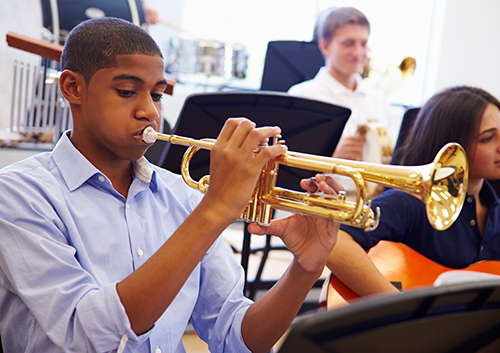
You’re in the band and you’re getting braces. Now what? If you are a member of the string or percussion sections, you can go back to rehearsal. You’re good to go. When your talents have seated you in the reed or brass sections, though, a little adjustment might be necessary to keep your instrument and your braces working in harmony.

If you play a wind instrument, you know the term embouchure—the way you position and use your lips, tongue, facial muscles, and teeth to produce the sound you want. Depending on the instrument you play, you might be completely unaffected when you get your braces, or you might need to develop a more comfortable embouchure to accommodate them.

Wires and Woodwinds?

If you play a wind instrument such as the flute or piccolo, you might find that your normal lip positioning or blowing angle is affected by your braces, but usually the adjustment time is fairly short. Reed instruments such as the saxophone, clarinet, oboe, and bassoon are considered some of the easiest to adjust to when you have braces, but even though the single and double reed mouthpieces don’t require as much pressure as brass instruments, there can still be an adjustment period. One thing you should look out for is more condensation in your mouthpiece or instrument—be sure to keep your instrument clean to keep your sound pure.

Brackets and Brass?

Brass instruments require mouthpiece pressure. This leaves your lips pressed between the mouthpiece and your braces. For this reason, many brass players have a more challenging adjustment when wearing braces. Smaller mouthpieces (trumpet, French horn) usually require more pressure than larger ones (tuba, trombone). It’s important to learn how to use technique to avoid cuts, irritation, and other injuries caused by the pressure of your braces against your lips. Learning to play with less pressure on the lips and more air control and breath support will help you to recover your tone and range of notes while protecting your lips and mouth.

How Can We Help?

Let Dr. Archana Dhawan know if you play, or plan to play, a wind instrument. We might be able to offer some suggestions. For regular metal and ceramic braces, some musicians find extra wax is helpful in preventing lip and cheek injuries. There are brace guards available that can be applied over the braces to protect your lips and mouth if wax doesn’t do the trick.

There are also alternatives to regular bracket-and-wire braces, depending on your orthodontic needs, cost factors, and length of treatment. Invisalign® devices fit smoothly over your teeth and can even be removed when it is time to practice or play, as long as you get the necessary hours of wear in per day. In some cases, lingual braces, where the brackets and wires are placed behind the teeth, might be the best choice for you.

Finally, don’t forget to talk to your music instructor. Don’t be dismayed if you find the quality of your playing has been affected. Your teacher might have valuable suggestions for adjusting your embouchure, playing with less pressure on the lips, and developing better air and breath support. You might need to shorten your practice time at first, and there might be another period of adjustment after your braces come off.

Above all, take care of yourself! If something is poking your lip or cheek, call our Troy office immediately before it causes injury. It might be difficult at first, but finding an embouchure that works for your comfort and technique is worth it. And remember, these temporary fine-tunings will lead to a wonderful coda: skilled musicianship and a beautiful, healthy smile. Bravo!

Planning Your Vegetarian Diet with Your Oral Health in Mind

If you’ve been following a vegetarian or vegan diet, you know that there’s much more to living a healthy life than simply avoiding meat products. Making sure your diet includes enough protein, as well as any nutrients that are primarily available in animal products, takes planning, and there’s no one-menu-fits-all solution.

Why? Because there’s no one menu that will suit all vegetarians. Specific vegetarian diets can allow for many different options:

  • Vegan—a plant-based diet which excludes meat, fish, dairy, and egg products
  • Ovo-vegetarian—includes eggs as a dietary option, but no dairy
  • Lacto-vegetarian— includes dairy as a dietary option, but no eggs
  • Lacto-ovo-vegetarian—a meat-free diet which allows both dairy products and eggs

If you are a pescatarian, who eats fish on occasion, or a flexitarian, who sometimes includes meat in a meal, your menu options are even broader.

So let’s look at the big picture—a healthy vegetarian diet is really more concerned with the foods you do eat for nutrition rather than the foods you don’t. You can create a meal plan rich in all your essential nutrients with a little research, no matter which type of vegetarian diet is your go-to choice.

And while you’re constructing your ideal menu guidelines, don’t forget about your dental nutrition!

In terms of keeping your teeth and gums their healthiest, what important vitamins and minerals are often missing from vegetarian and vegan diets? Let’s look at three of them.

  • Calcium

Calcium is essential for maintaining strong bones and tooth enamel. Without enough calcium, a weakened jawbone leads to loose, and even lost, teeth. The acids in our food and the acids created by oral bacteria also weaken the minerals in enamel, including calcium. These weak spots can eventually become cavities. A diet rich in calcium not only supports the bones holding our teeth, but can even help repair, or remineralize, enamel which has been weakened by acidic erosion.

For vegetarians who include dairy in their diets, dairy products are a great way to include calcium. Milk, cheese, and yogurt are traditional and rich sources of this mineral.

For vegans, it’s a bit more challenging, but still doable! Non-dairy foods providing calcium include dark green vegetables (kale, broccoli, spinach), certain types of tofu, and fortified cereals, juices, and non-dairy milks.

  • Vitamin D

Now you’re ready to put that calcium to work by making sure you have enough vitamin D in your diet. Vitamin D not only helps keep our bones healthy, it also enables our bodies to absorb calcium. Bonus—it’s been linked to better gum health in several studies.

So how to get more vitamin D? If you eat dairy, most dairy products have been fortified with vitamin D. If eggs are a part of your diet, egg yolks are a great source. Pescatarians can enjoy the benefits of vitamin D from fatty fish such as tuna and salmon.

Because we get most of our vitamin D from sun exposure or foods derived from animals, plant-based foods are not a practical way to obtain the vitamin D you need. But, just as non-vegetarians can get plentiful vitamin D from fortified dairy products, vegans also have options. Try adding cereals, juices, and non-dairy milks fortified with this essential nutrient to your diet, or take a vegan vitamin D supplement.

  • Vitamin B12

Vitamin B12 is essential for healthy red blood cells, nerve cell development, brain function, and DNA production. (This is why it’s especially important for pregnant and nursing women.) Vitamin B12 can also impact your oral health. A B12 deficiency can cause a swollen, sore, or inflamed tongue, loss of taste, and gum, tongue, and mouth ulcers.

Unfortunately, vitamin B12 is reliably found only in animal foods and nutritional yeasts. If you would prefer an egg-free and dairy-free diet, look to B12 supplements or B12-fortified cereals, plant-based milks, energy bars, and other vegan options. This is a good subject to discuss with your physician, because even supplements and fortified foods might not provide enough B12.

In fact, Dr. Archana Dhawan can be vital resources when you’re planning your healthiest vegetarian diet. The next time you visit our Troy office, ask for recommendations for supplements if you’re concerned that diet alone can’t provide for all of your nutrition essentials. Finally, care should be taken to ensure that, even with supplements, you get the proper amount of the vitamins and minerals you need.

As a vegetarian, you are used to the concept of care. Whether it was concern for nutrition, the planet, the animal world, or another reason that drew you to a vegetarian diet, be sure to care for your body as well as your dietary choices. Careful planning can ensure a diet which supports not only your general health, but your oral health, for a lifetime of nourishing—and well-nourished—smiles.

Orthodontic Treatments

It’s not unusual for a patient to be unaware of the range of services that orthodontists can provide for their patients. Knowing which services Dr. Archana Dhawan and our team perform can help you better understand your options and why we might select a particular method of treatment.

Both orthodontists and dentists care about good oral health, but they approach treatment in differing ways. You know that dentists clean teeth and treat gum disease, tooth decay, toothaches, and other oral health problems.

But what does your orthodontist do besides help straighten teeth with the help of braces? Orthodontists are commonly known to help fix or realign crooked teeth. Many of the patients at Oakland Orthodontics come in for appointments that relate to their braces.

Dr. Archana Dhawan and our team recommend that children be seen around the age of seven to evaluate their potential orthodontic needs. Common problems may include overcrowding of teeth, large gaps or spaces, and overbites or underbites, among other things.

In order to address these common problems, we offer several methods of treatment besides standard braces and retainers:

  • Space maintainers can be used to fill the spaces left by missing baby teeth so other teeth don’t shift and occupy the adult tooth’s location.
  • Jaw repositioning appliances, sometimes known as splints, are used to reposition the upper and lower jaw bones correctly.
  • Lip and cheek bumpers can also be used to avoid having to pull teeth. These bumpers are placed in the mouth so the patient’s lips or cheeks don’t put pressure on specific teeth.
  • A more common appliance that orthodontists use is expanders. If your mouth is crowded, expanders will be placed on the curve of the upper and/or lower jaw(s) in order to make room for teeth to be properly aligned.
  • As a last resort, an orthodontist may turn to headgear. This is normally provided to slow down the growth of the jaw. It must be worn a number of hours each day.

When you visit our Troy office, we will go over these options with you and pick the best course of treatment, depending on the current state of your oral health.

No matter which oral appliances you end up with, Dr. Archana Dhawan and our team will go over all the available options with you to give you a beautiful smile. If you have questions regarding your treatment method, don’t hesitate to call our office and we can provide you with some insight.

Understanding the different options your orthodontist can provide should make matters less confusing if you should need to select a method of treatment.

‘Tis the Season—for Healthy Dental Choices!

It might be the most wonderful time of the year, but if you’re dashing through the snow to an emergency orthodontic appointment, you’re not feeling very jolly. And post-holiday, no one wants to start off their New Year’s Resolutions with “Get Cavities Filled.” How to survive the sweetest of seasons with braces and enamel intact?

Candies and sweets would normally be on the naughty list, but we’re not Scrooges! Indulging in a treat or two is part of the holiday fun, and we have some advice for how to enjoy them guilt-free. But first, some treats are definitely more naughty than nice. Which are the ones that are better as decorations than desserts?

  • Candy Canes

If you’ve ever suffered a broken bracket or a chipped tooth after an innocently biting down on a much-harder-than-expected piece of candy, you know that caution is in order. That’s why we tend to savor candy canes, letting them dissolve slowly in the mouth. Of course, the drawback to this strategy is that now we’re slowly bathing our teeth in sugar, encouraging the growth of plaque and cavity-causing bacteria.

Candy canes, peppermints, and other hard candies are potentially bad for your teeth and braces when you crunch away, and definitely bad for your teeth if you let them dissolve slowly.

  • Gumdrops

Glistening, colorful gumdrops. Roofing your gingerbread house, trimming a gumdrop tree, or simply sitting in a bowl, they are one of the sweetest ways to decorate for the holidays.  And when we say “sweet,” we mean that literally. Most gumdrops are basically made of corn syrup and sugar—and then rolled in more sugar.

But their sugar content isn’t the only problem. This is sugar in an extra-gummy form that sticks between our teeth and along our gums, and gets caught around brackets and wires.

  • Toffees, Caramels, Taffy

They might come in lovely ribboned boxes, but these extremely sticky foods are not a gift to your teeth.

Not only do chewy candies stick to enamel, they stick to fillings, crowns (especially temporary crowns), and orthodontic wires and brackets. No one wants an unexpected trip to the dentist or orthodontist because dental work has been damaged or dislodged!

  • Gingerbread Houses

Nothing says the holidays like a gingerbread house—chewy, sticky gingerbread covered with hard sugar icing, gumdrops, and peppermints. Great for your décor; not so great for your dental health. Eat one gingerbread man if you’re in a spicy mood and leave your architectural masterpiece intact.

Well, this list wasn’t very jolly. So as a little holiday gift for you, here are some suggestions to help you enjoy your desserts in the healthiest way possible.

  • Be choosy.

Just like you search for the perfect presents for your family and friends, take the time to choose the perfect holiday treats for yourself. If you are wear braces, or are worried about cavities, or are just generally concerned with your oral health, stay away from sticky, hard, and excessively sugary desserts.

What can you accept from your holiday hosts with a grateful (and relieved) smile? The occasional soft chocolate should be nothing to stress about—and if you make it dark chocolate, you’ll actually get nutritional bonuses like magnesium and antioxidants. Soft cakes, cupcakes, cookies, and pies should be braces-friendly—yes, they are made with lots of sugar, but it is the holidays after all. Just be sure to follow our next suggestions to make that slice of cheesecake guilt-free.

  • Eat sweets with a meal.

Saliva does more than keep our mouths from getting dry. It also helps prevent cavities by washing away food particles and neutralizing the acids from food and bacteria which damage enamel.

Eat dessert with a meal, and you benefit from increased mealtime saliva production. When you snack throughout the day, this acid-neutralizing ability is greatly reduced.

  • Rinse after eating.

Rinsing your mouth with water after a meal or a snack, especially a sugary one, also helps wash away the sugars and carbs which oral bacteria convert into cavity-causing acids.

  • Brush immediately. (Maybe.)

If you wear braces, you want to make sure there are no food particles stuck around your brackets and wires. If you wear aligners, you want to get rid of food particles on and around your teeth before you replace your aligners after eating.

But if you’ve eaten acidic foods like citrus or colas, the acids in the food can weaken your enamel just enough to cause some potential enamel damage if you scour your teeth immediately after eating. We often recommend waiting about 30 minutes to brush to give your enamel a chance to recover.

Since every mouth is different, especially when you wear braces, talk to Dr. Archana Dhawan for the best times and methods for holiday brushing.

You don’t want to ho-ho-hope that we can fit you in at our Troy office for a bracket repair. Make your holiday dessert list and check it twice, and make sure you’re brushing and flossing more often if you’re indulging in seasonal treats—give yourself these two gifts, and you’ll be ringing in the New Year with a beautiful, healthy smile. Sweet!

Thanksgiving in North America

Thanksgiving marks the start to the holidays; a season filled with feasting, indulging, and spending time with family and friends are always special. Thanksgiving is a holiday meant for giving thanks, and while this may seem like such a natural celebration, the United States is only one of a handful of countries to officially celebrate with a holiday.

Unlike many holidays, Thanksgiving is a secular holiday, and it is celebrated on the fourth Thursday in November in the United States. In Canada, it is celebrated on the second Monday of October, which is, oddly enough, much closer to a time when harvests were likely gathered. In addition to the different dates, the origins of the celebration also share different roots.

Thanksgiving in the United States

Giving thanks for a bountiful harvest are not new, but the modern day holiday in the US can be traced to a celebration at Plymouth in Massachusetts in 1621. This feast of thanksgiving was inspired by a good harvest, and the tradition was simply continued on. At first, the colony at Plymouth didn’t have enough food to feed everyone present, but the Native Americans helped by providing seeds and teaching them how to fish, and they soon began to be able to hold a feast worthy of the name. The tradition spread, and by the 1660s, most of New England was hosting a Thanksgiving feast in honor of the harvest.

Canadian Thanksgiving

An explorer of early Canada named Martin Frobisher is accredited for the first Canadian Thanksgiving. He survived the arduous journey from England through harsh weather conditions and rough terrain, and after his last voyage from Europe to present-day Nunavut, he held a formal ceremony to give thanks for his survival and good fortune. As time passed and more settlers arrived, a feast was added to what quickly became a yearly tradition. Another explorer, Samuel de Champlain, is linked to the first actual Thanksgiving celebration in honor of a successful harvest; settlers who arrived with him in New France celebrated the harvest with a bountiful feast.

A Modern Thanksgiving

Today, Thanksgiving is traditionally celebrated with the best of Americana. From feasts and football games to getting ready for the start of the Christmas shopping season, Thanksgiving means roasted turkey, pumpkin pie, and green bean casserole. No matter how you celebrate this momentous day, pause for a moment to give thanks for your friends, family, and all the bounties you’ve received. Happy Thanksgiving from Oakland Orthodontics!

Breakfast with Braces

Breakfast is called the most important meal of the day for many reasons. Children need to refuel after a long night’s sleep, and studies suggest that school kids who eat a good breakfast have more energy, better attendance and behavior, and even higher test scores than kids who don’t.

But sometimes, especially with new braces or braces that have just been adjusted, the last thing on your child’s mind is breakfast. Fortunately, Dr. Archana Dhawan can recommend many early morning options that will be both gentle on braces and healthy for growing bodies!

  • Yogurt

Soft, creamy, and filled with calcium and vitamin D, yogurt is an easy and nutritious choice. Try different fruit flavors or Greek yogurt for variety.

  • Eggs

Packed with protein, scrambled eggs are delicious on their own, or with the addition of cheese or soft veggies. If you’d like to add a bit of flair to the table, a cheese omelet is another great choice. Any egg option is a good one—just remember to skip the crunchy toast on the side.

  • Smoothies

Not only a great way to start your day, but a great way to get vitamins and minerals in one delicious meal. And with a flavor base of banana, mango, berries, or apple, no one will notice if some spinach or kale make their way into the blender!

  • Oatmeal

Unfortunately for the cereal lover, crunchy cereals and even granola are potentially damaging to wires and brackets. But oatmeal is a healthy alternative that can be made even tastier with the addition of soft fruits such as mangos, berries, and bananas.

  • Breads and Pastries

Crunchy and chewy breads and pastries can lead to broken brackets and wires. Soft breads, pancakes, non-crunchy French toast, and soft pastries are much kinder to braces. Because so many of these options are rich in sugar (especially with syrup!), it’s best to go lighter on foods like this and be sure to brush carefully afterward.

  • Fruit

Bananas, peaches, nectarines, berries—if it’s soft, it’s good to go! Cut larger fruits into bite-sized pieces. Dried fruits like raisins, dates, and cranberries can be chewy, sticky, and sugary, so best to take them off the shopping list for the time being.

It’s described as the most important meal of the day for many good reasons. With some of these easy-to-prepare breakfasts, you can add delicious, healthy, and braces-friendly to that description! If you stumble on a delicious recipe, don’t forget to share it the next time you visit our Troy office!

A Fun Halloween with Braces

Having teeth encased in braces can be discouraging during Halloween. If you or your child has braces, there are certain candies to avoid this holiday season—and in general—while you have braces. Candy can be tempting, especially for children.

But don’t worry; other sweet treat options can readily take their place. Take a look at the American Association of Orthodontists’ tips on how to keep your braces safe.

Treats to avoid because they can cause damage to your braces include:

  • Hard candies
  • Chewy candies
  • Nuts
  • Caramel
  • Licorice
  • Jelly beans
  • Taffy
  • Bubblegum
  • Hard pretzels
  • Popcorn

These goodies should be avoided because they have the potential to bend or break your braces. Broken brackets and loose wires can waste time and money.

Switch out hard, chewy, and sticky candies for these options in the mean time:

  • Soft chocolate
  • Peanut butter cups
  • Gelatin treats
  • Ice cream
  • Smoothies
  • Root beer floats
  • Apple cider

Encouraging your child to stay with alternative, braces-friendly treats may prevent her from trying to eat candies that could break or damage braces. Halloween can still be fun, especially if your youngster (or you) don’t have to visit our Troy office get braces fixed.

Make sure to remind your child to avoid harmful candies, and encourage him to exchange treats with friends to make it more fun. Only passing out candies that children can eat safely, such as soft chocolates, can make them feel included.

Dr. Archana Dhawan and our team hope you enjoy your Halloween season, regardless of whether you are wearing braces.